Imagine the Mleczna valley before Radom had a name.
There are no roads, traffic lights or apartment blocks. No town hall rises above the streets and there is no medieval market square. Instead, there are woods, open land and the river winding through the landscape.
Somewhere here, according to local legend, a warrior named Radomir stopped and looked around.
The place seemed right for a settlement. There was water, fertile ground and woodland. But Radomir wanted a sign before making his decision.
Then an eagle appeared above the valley.
Taking the bird as an omen, Radomir chose the spot for his stronghold. The settlement, the story says, became Radom, taking its name from its founder.
It is a picturesque beginning to the story of the city. It is also a story that needs a small footnote: there is no historical evidence that Radomir actually founded Radom.
Yet the landscape at the heart of the legend is very real.
Where Radom began
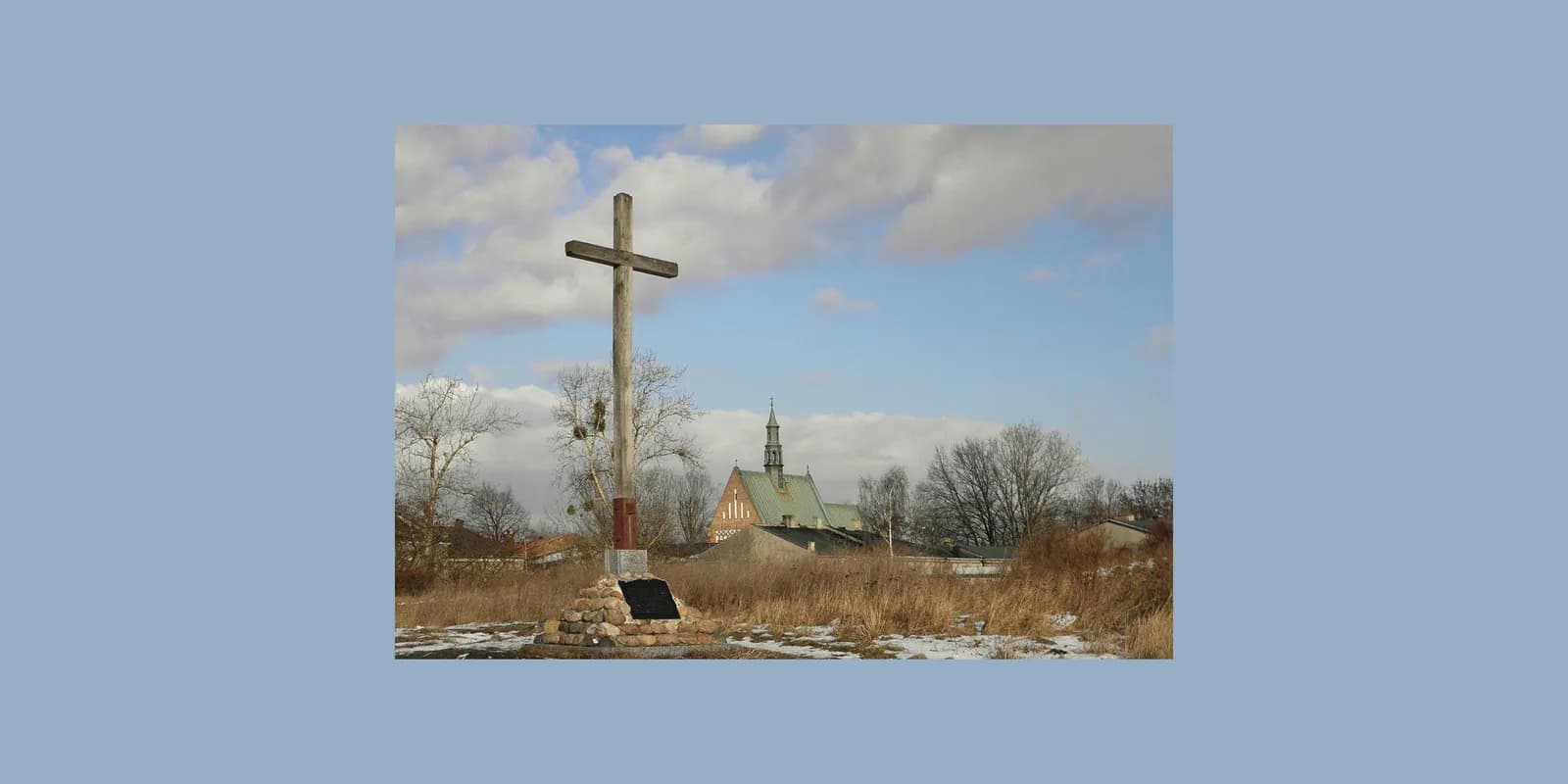
Today, Piotrówka is one of the places where Radom's distant past can still be connected to the landscape.
Archaeology shows that people have lived in the wider area for thousands of years, but the beginnings of medieval Radom belong to a much later period.
By around the 8th or 9th century, a settlement had developed in the Mleczna valley. During the second half of the 10th century, a fortified stronghold was established at Piotrówka.
The stronghold was protected by earthworks and a moat and became an important centre for the surrounding settlement.
This is where the legend becomes particularly interesting.
There was no documented Radomir standing on the hill with an eagle overhead. But there really was an early settlement here, and there really was a fortified centre overlooking the valley.
The storytellers got the setting right, even if history cannot confirm their hero.
A name with an old story
The name Radom may also have helped give the legend its shape.
The generally accepted linguistic explanation connects the name with the old Slavic personal name Radom, related to Radomir. It may originally have described a place associated with someone bearing that name.
Centuries later, it is easy to see how a name like this could inspire a story about a founder called Radomir.
There is another popular version of the legend that takes the wordplay even further.
A young traveller becomes lost in the forest and discovers a beautiful place where he decides he would gladly build a home. The Polish phrase "Rad dom bym tutaj zbudował" is used to explain how the name Radom came into being.
While it is a charming piece of folklore, it is not an etymology accepted by historians and linguists.
The silver-feathered eagle
The eagle appears again in another Radom foundation story, "O srebrnopiórym orle i radomskim grodzie", or The Silver-Feathered Eagle and the Radom Stronghold.
Here, the eagle becomes part of a more magical tale involving a traveller, a mysterious settlement and an enchanted community.
The details vary between versions, as they often do with traditional legends. What remains consistent is the idea of discovery: someone arrives in an unfamiliar landscape, recognises its potential and decides that this is where a home should stand.
That idea feels particularly appropriate for Radom.
The city grew in a landscape that offered many of the practical advantages an early settlement required. The Mleczna provided water, the surrounding land offered resources and Piotrówka provided a natural location for a fortified centre.
The legend turns these practical considerations into something more dramatic.
Instead of simply finding a suitable place, Radomir receives a sign from the sky.
Radom enters the written record
The historical Radom eventually leaves the world of legends and appears in documents.
The earliest known written reference dates to 1155, when a papal bull issued by Pope Hadrian IV refers to Sławno as being iuxta Radom, meaning "near Radom".
By this point, Radom was already an established settlement.
Its development had not happened overnight. The fortified centre at Piotrówka belonged to an earlier period, while settlement and administration continued to evolve around it.
That makes the traditional idea of a single founding moment rather misleading.
Radom was not created in one afternoon when an eagle circled overhead. Its beginnings were spread across generations.
When Kazimierz Wielki reshaped the town
The next major chapter came in the 14th century under Kazimierz III Wielki, Casimir the Great.
A new urban centre, known as New Radom, was established and in 1364 received Magdeburg rights.
This was a significant moment in the city's development, bringing a more formal urban structure and legal framework.
But Kazimierz Wielki was not founding Radom from nothing. The city already had a long history behind it.
The medieval town was built on foundations laid by generations who had settled, traded, farmed and defended themselves in this part of the Mleczna valley.
Look around Piotrówka
That long history can be easy to overlook when moving through modern Radom.
The city is busy, built-up and unmistakably contemporary. Yet at Piotrówka, the landscape offers a glimpse of the setting in which the story began.
It is not difficult to imagine why an early community might have chosen this part of the valley.
The river is close. The land opens out around the settlement. The rise of Piotrówka offers a commanding position.
You do not need to believe in Radomir to appreciate the story.
The eagle can remain where it belongs, in the realm of legend, while the archaeology provides the solid ground beneath it.
A founder we cannot prove
So, did Radomir really stand above the Mleczna River and watch an eagle choose the future site of Radom?
We cannot say.
No historical source identifies him as the founder of the city, and there is no evidence for the legendary scene.
What we can say is that the story reflects something genuine about Radom's beginnings. An early settlement grew here, a fortified stronghold emerged at Piotrówka and the name Radom was established centuries before the medieval town took its later form.
Perhaps that is enough to keep the old story alive.
Every city has its documents, dates and archaeological layers. Radom also has an eagle in the sky, a warrior on the riverbank and a name wrapped in centuries of storytelling.
The warrior may belong to legend. The valley is real.
And somewhere around Piotrówka, the two stories meet.
See more: Miasto Kazimierzowskie: Discover the Medieval Heart of Radom
Image credit: Rafał T, Wikimedia Commons, CC BY-SA 3.0